Vastu Design

Vastu – The Historical Origin and Its Role in Architecture

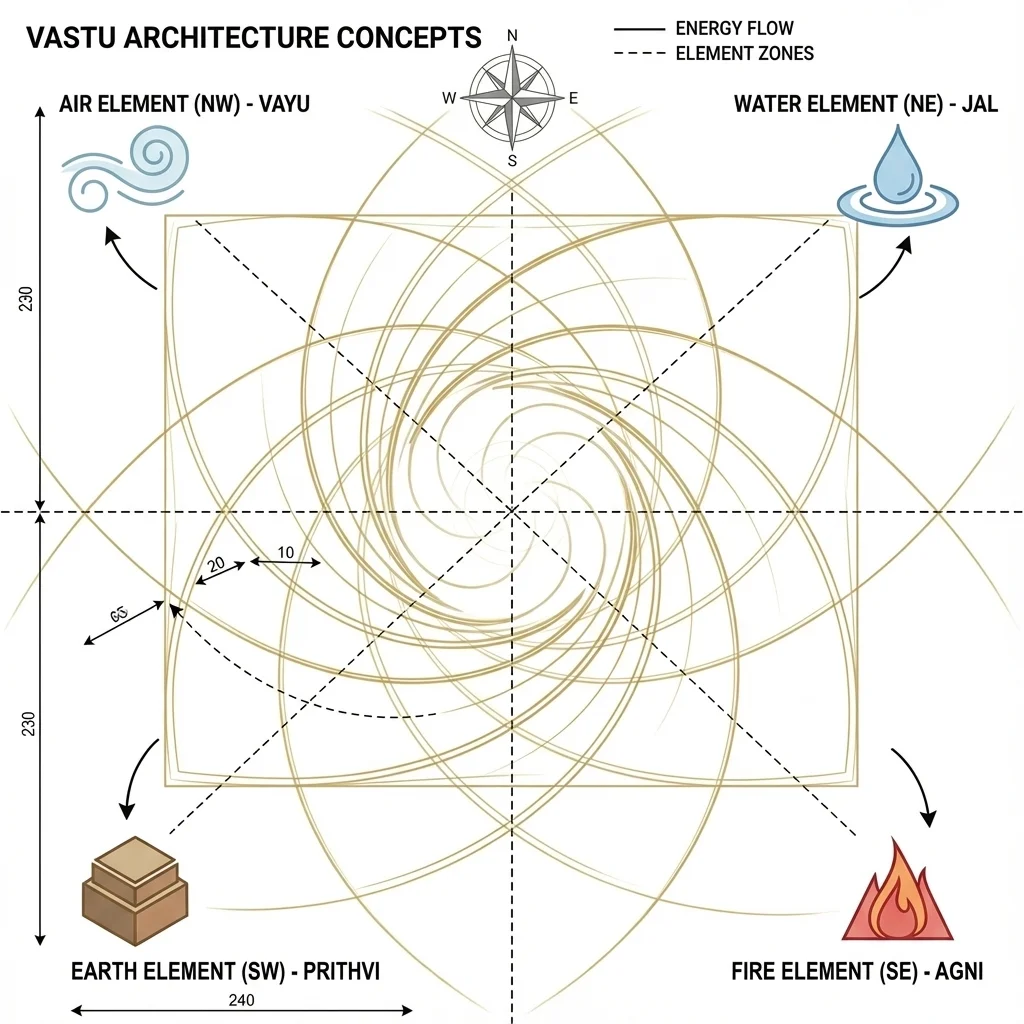
Vastu Shastra is an ancient Indian system of spatial design that connects architecture with natural forces and human well-being. Emerging from early Vedic traditions, it developed as a way to understand how the built environment influences daily life. Its principles draw on the five elements—earth, water, fire, air, and space—and the orientation of a structure within the larger landscape. Historically, Vastu guided the planning of homes, temples, and entire settlements, using geometry, proportion, and directional alignment to create environments that felt balanced, purposeful, and attuned to nature.

In architectural practice today, Vastu offers a framework for creating spaces that support comfort, clarity, and harmony. It emphasizes how light, movement, and function interact within a home, and how the placement of rooms can influence the experience of living in them. Rather than being mystical or rigid, Vastu can be understood as a thoughtful approach to spatial organization—one that considers orientation, circulation, and the emotional quality of a space. Many homeowners value Vastu because it brings intention to the design process and helps create environments that feel grounded, uplifting, and aligned with the rhythms of daily life.
Applying Vastu Thoughtfully in North America

North American homes present a wide range of site orientations, climate conditions, and zoning constraints, yet Vastu principles can be adapted with intention and flexibility to enhance comfort, flow, and emotional balance. Rather than applying the tradition rigidly, we interpret its underlying logic—light, movement, elemental balance, and spatial hierarchy—and translate it into solutions that work seamlessly within modern North American architecture.

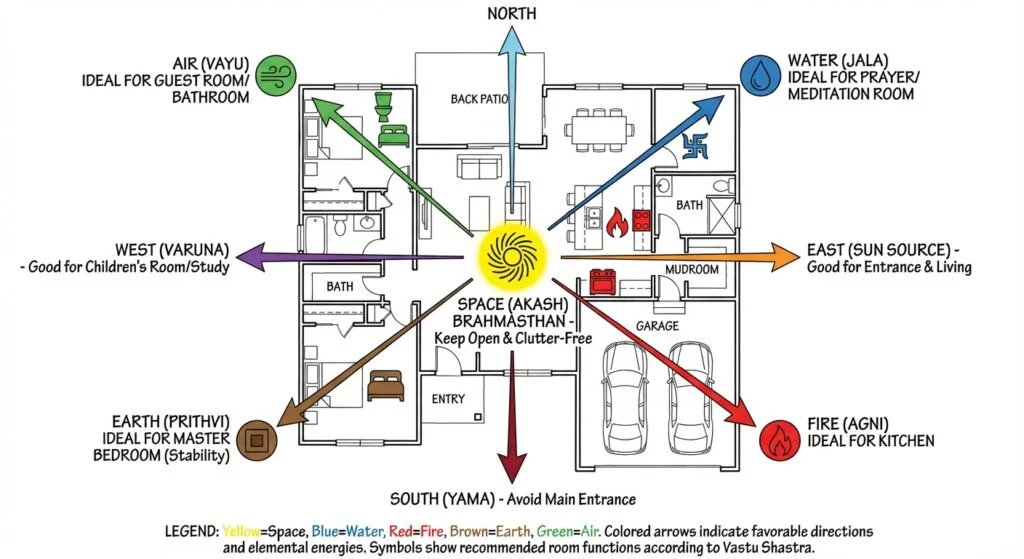
For example, entry orientation is a key Vastu consideration. While an east- or north-facing entry is ideal, many suburban lots do not allow this. In such cases, we may introduce morning light through clerestory windows or position the foyer to receive soft natural light from the east, preserving the spirit of the principle even when the door itself faces another direction. Similarly, the northeast zone, traditionally associated with calm and clarity, can be reserved for quiet functions such as a study, meditation room, or a light-filled breakfast nook—spaces that benefit from gentle morning light in northern climates.

The southeast, associated with fire and activity, often becomes a natural location for the kitchen. When the kitchen cannot be placed there due to plumbing or layout constraints, we may orient the cooktop or primary work zone toward the southeast, or use lighting and material choices to reinforce the sense of warmth and energy that Vastu associates with this quadrant.

In larger North American homes, zoning public and private spaces aligns well with Vastu’s emphasis on spatial hierarchy. Primary bedrooms can be placed in the southwest to create a grounded, stable retreat, while children’s rooms or guest suites may occupy the west or northwest, where airflow and evening light support activity and transition.

Vastu also integrates naturally with sustainable design practices common in North America. Its focus on natural ventilation, daylighting, and elemental balance complements energy-efficient planning. For instance, placing water features or landscape views in the north or northeast can enhance both Vastu alignment and passive cooling strategies. Similarly, ensuring good cross-ventilation in the west and northwest supports both comfort and Vastu’s association of these directions with movement and transition.

Even when exact alignments are not possible due to HOA rules, narrow lots, or fixed subdivision layouts, the intent behind Vastu—balance, clarity, and connection to natural forces—can be expressed through proportion, circulation, materiality, and the thoughtful sequencing of spaces. This approach allows clients to enjoy the cultural and emotional resonance of Vastu while embracing the architectural language, lifestyle patterns, and construction realities of North American homes.

Vastu Design Consultancy

At Vistara Design, we integrate Vastu principles into our custom home design process through a thoughtful, modern lens—guided by a team that includes renowned Vastu experts with decades of experience in traditional spatial planning. Their deep knowledge informs our approach from the very beginning, helping us understand each client’s cultural expectations, lifestyle patterns, and long-term goals.

Together, we apply Vastu concepts with flexibility and intention, using them to shape orientation, room placement, natural light, and spatial flow while maintaining the architectural clarity and contemporary functionality our clients expect. Rather than treating Vastu as a rigid set of rules, we use it as a framework that enhances comfort, balance, and emotional resonance within the home.

This collaboration between architectural design and Vastu expertise allows us to create residences that honor tradition, support modern living, and feel deeply aligned with the people who inhabit them.

This collaboration between architectural design and Vastu expertise allows us to create residences that honor tradition, support modern living, and feel deeply aligned with the people who inhabit them.